

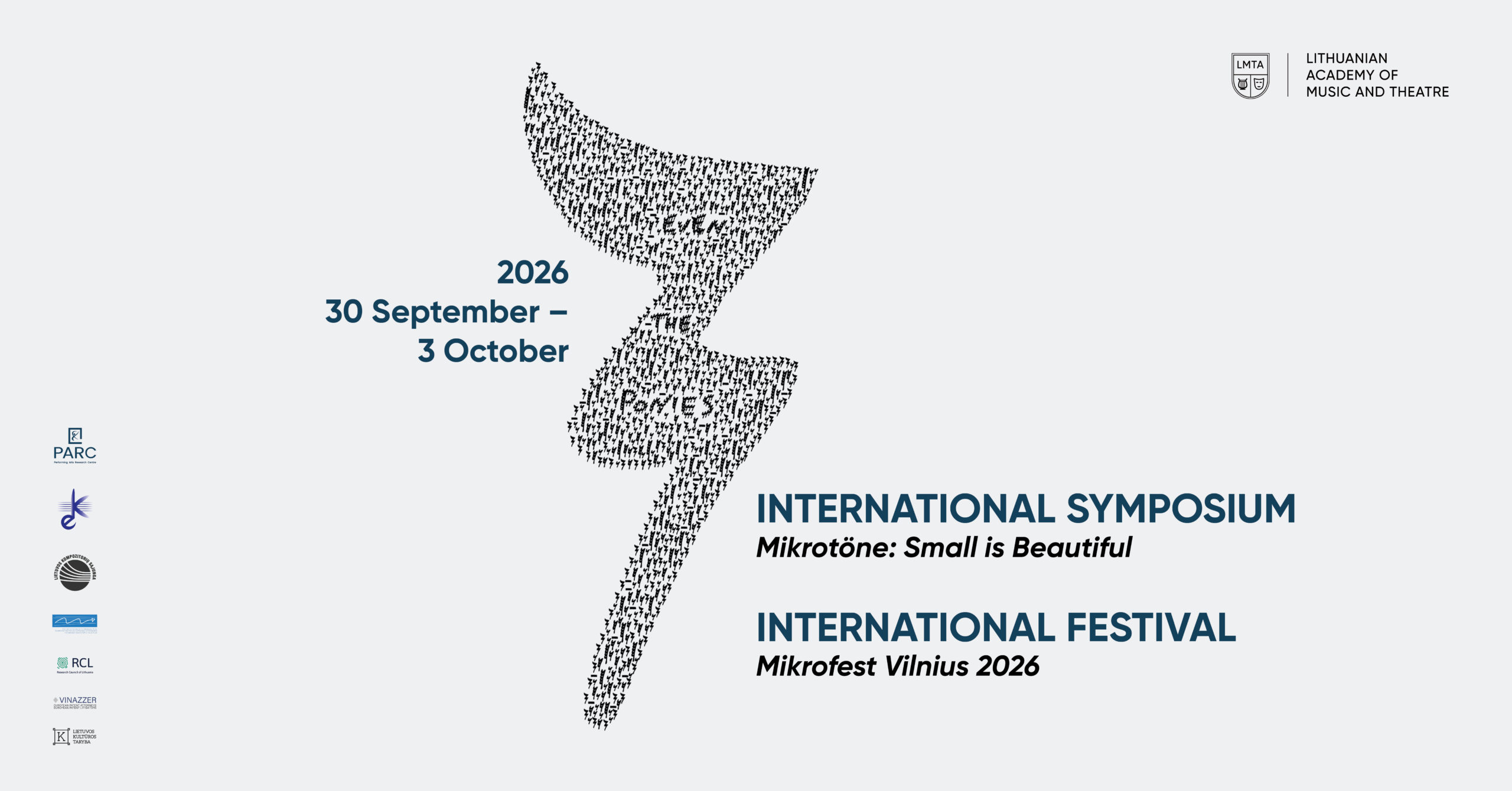
1–3 October, 2026
Lithuanian Academy of Music and Theatre, Main Building (Gedimino Ave. 42, Vilnius)
Balcony Theatre (2nd floor)
Great Hall (3rd floor)
1 October (Thursday), 18:30
LMTA Balcony Theatre (Gedimino Ave. 42, Vilnius)
Concert–workshop Back to the Future of the Quarter-Tone Piano: Exploring Acoustic Quarter-Tone Resonances
Elisa Järvi (Disklavier, Finland)
This evening’s concert presents, in a new acoustic format, the quarter-tone piano repertoire featured on Elisa Järvi’s album In Tune – Tune In! (SibaRecords, 2025). For the first time, these works can be experienced acoustically using Yamaha Disklavier technology.
The programme is realised on two pianos, with MIDI edited by Kaj Mäki-Ullakko. The original performances were recorded by Elisa Järvi using the Finnish quarter-tone piano keyboard, allowing this microtonal repertoire to be realised acoustically on two pianos.
Concert programme:
Charles Ives (1874–1954)
Three Quarter-Tone Pieces (1923–24)
I. Largo, very slowly
Ivan Wyschnegradsky (1893–1979)
Twenty-four Preludes in the Quarter-Tone System Op. 22 (1934, rev. 1960–70)
I. Presto
III.
Tui St. George-Tucker (1924–2004)
Little Pieces for Quartertone Piano (1972)
Andante, with great clarity
Moderato
Allegro non troppo
Allegro moderato
Hannu Pohjannoro (b. 1963)
Shadows of Light (Six Preludes for Quarter-Tone Piano) (2016–17)
I. Andante espressivo
II. Calmo
III. Vivace, energico
IV.
V. Lento
VI. Lento
Lauri Mäntysaari (b. 1982)
Three Birdflight Impressions for Quarter-Tone Piano (2019–22)
I. Woodcock, roding
II. Barn Owl, emerging from the dark
III. The Great Migration
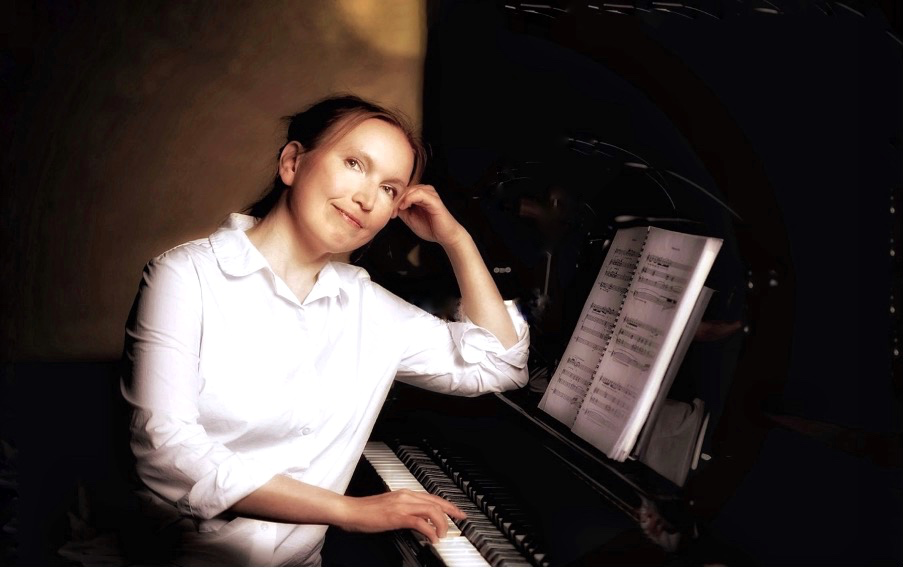
Photo: Sakari Röyskö, 2024
1 October (Thursday), 20:00
LMTA Balcony Theatre (Gedimino Ave. 42, Vilnius)
Lecture–Open Lab Between the Key and the Code
Julija Vingelė, Mantautas Krukauskas (Lithuania)
In the lecture–open laboratory led by Mantautas Krukauskas and Julija Vingelė, the Disklavier becomes a space for creative experimentation, bringing together the acoustic sound of the piano, digital technologies and live performance. The artists share their creative experience and present different approaches to working with the instrument, illustrating their verbal presentation with excerpts of live music.
During the event, the Disklavier emerges not only as a piano enhanced by technological possibilities. It becomes a creative partner in its own right, opening up new relationships between the performer, composer and instrument. Through improvisation and composition, the artists explore the sonic potential, the influence of technology on creative decisions, and new forms of musical interaction.
2 October (Friday), 18:00
LMTA Balcony Theatre (Gedimino Ave. 42, Vilnius)
“The World of Untempered Sounds: Arabic Maqam, Improvisation and the Sufi Tradition”
Lecture–Improvisation:
Hossam Mahmoud (Oud; Egypt, Austria), Frank Stadler (Violin, Austria)
– Why is there no clear notation for ancient and classical Arabic music?
– Why is there no established school of this music?
– Why can oral tradition be more compelling than conventional musical notation?
– How can untempered music be interpreted convincingly?
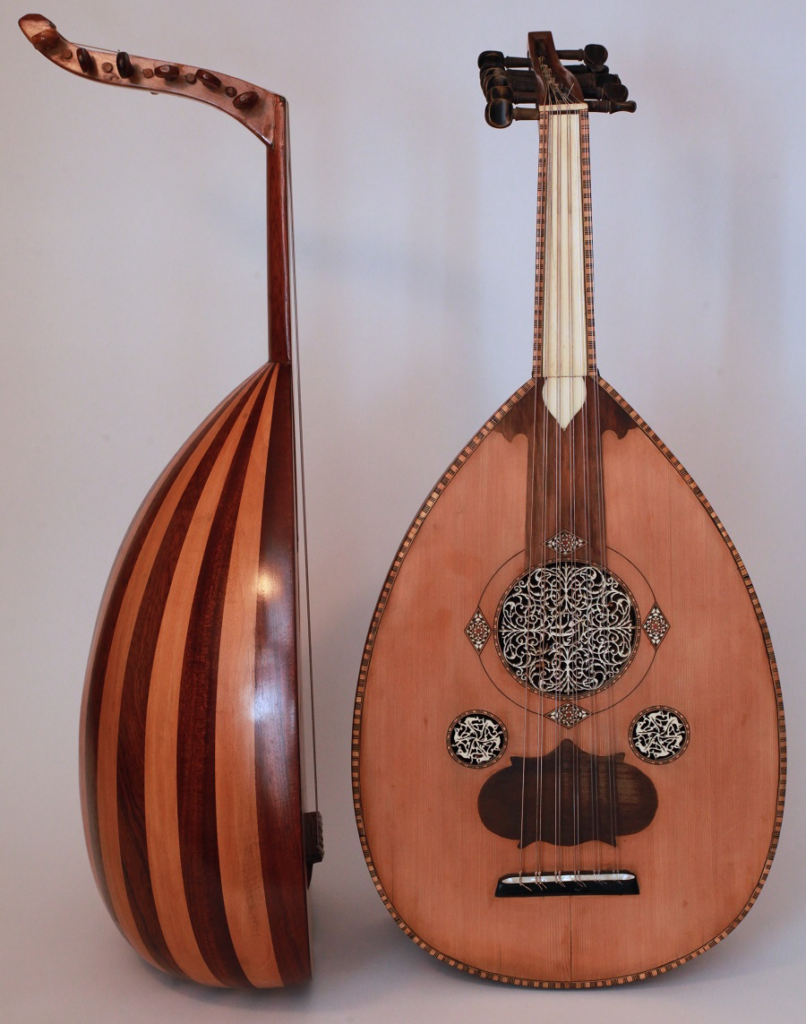
These and other questions will be addressed in the lecture, illustrated with audio recordings and live performances on the violin and the oud, an Arabic stringed instrument.
Film Screening:
Al Gazulea – School of Transfiguration, director Nancy Kamal (Egypt, Austria)
World Premiere: DAS KINO, Salzburg – 7 October 2026
In this documentary, filmed over a year and a half, director Nancy Kamal follows the Egyptian Sufi order Al Gazoulea on an extraordinary journey of more than one thousand kilometres across the desert and through remote villages. The camera offers a close look at a community whose daily life and spiritual practices are rarely visible to outsiders.
Love, death, life, music and poetry are the five central themes of this journey and the film. Through rituals, music, community members’ stories and everyday moments, the film reveals not only the Sufi order’s history and spiritual traditions, but also the bonds among the people, their relationship to faith and their connection to the world beyond the community.
The film is not merely a record of a little-known community, but also an intimate portrait, in which the physical journey through the Egyptian landscape is intertwined with the search for inner and spiritual transformation. Here, music and poetry are not just elements accompanying the narrative: they are an integral part of the ritual experience and community life.
Concept: Hossam Mahmoud
Produced by: WOD, Hossam Mahmoud, Frank Stadler
Cinematographer: Nabil Samier
Sound Director: Andreas Fischer
3 October (Saturday), 14:00
LMTA Balcony Theatre (Gedimino Ave. 42, Vilnius)
Creative workshop by Juhani Nuorvala (Sibelius Academy of Music, Uniarts Helsinki)
The workshop will introduce participants to the fundamentals of musical instrument tuning theory and the 72-tone equal temperament (72-EDO) system, a system that divides the octave into 72 equal parts, offering a much finer spectrum of intervals than the conventional 12-tone equal temperament. The workshop will focus on the sonic properties of this system and its applications in Ekmelic organ performance, composition and improvisation.
The theoretical part of the workshop will be complemented by hands-on work with the Ekmelic organ including demonstrations of its sound, close listening to microintervals and experimentation with different sound combinations. Participants will experience first-hand how the 72-EDO system expands the conventional range of sounds and intervals and discover the new expressive possibilities it offers performers, improvisers and composers.
Workshop registration: Juhani Nuorvalos (Sibelijaus muzikos akademija, Uniarts Helsinki) kūrybinės dirbtuvės – Fill in form

Photo: Saara Vuorjoki / Music Finland
3 October (Saturday), 17:00
LMTA Balcony Theatre (Gedimino Ave. 42, Vilnius)
Lithuanian and Foreign Composers’ Premieres for the Ekmelic Organ 2026
Julija Vingelė (Ekmelic organ, Lithuania)
Paula Bagotyriūtė (Ekmelic organ, Lithuania)
Neringa Valuntonytė (Ekmelic organ, Lithuania)
Elisa Järvi (Piano, Finland)
Agustín Castilla-Ávila (Electric guitar, Spain)
Frank Stadler (Violin, Austria)
After forty-five years at the Mozarteum University in Salzburg, the Ekmelic organ begins a new chapter in its history at the Lithuanian Academy of Music and Theatre in Vilnius. For the first time, the concert will feature seven compositions by six composers, all written especially for the Mikrofest festival and for this exceptional instrument.
In the new works, the composers explore the sonic and structural potential of the Ekmelic organ in various ways – through microintervals and tuning systems, unconventional approaches to notation and the possibilities offered by the three manuals of the Ekmelic organ. The programme brings together quarter-tones, sixth-tones and twelfth-tones, systems that divide the octave into 36 and 72 equal parts, and various principles of microtonal harmony. These are accompanied by Lithuanian folk harmonies and quotations from earlier works, forging connections between different musical traditions and contemporary microtonal music.
An important part of the programme is the dialogue between the Ekmelic organ and other instruments. In some works, the organ’s sound blends with that of an electric guitar, in others with that of a violin or piano. The composers explore the resonance of the instrument, the relationship between long-sustained sonorities and silence, clusters and subtle changes in pitch. Here, microtonality emerges not only as a tuning system but also as a means of creating sonic spaces, textures and musical dramaturgy.
Seven new works invite the listener to experience the Ekmelic organ from different perspectives – from the most subtle microintervallic shifts to dense sonorities, and from its role as a solo instrument to its dialogue with other performers. At the same time, the concert marks a new chapter in the history of the instrument: after forty-five years in Salzburg, the Ekmelic organ now reveals its sonic and creative potential in Vilnius.
Concert programme:
Mykolas Natalevičius (b. 1985)
Project 658 for Ekmelic Organ (2026)
Božena Čiurlionienė (b. 1988)
Order Itself is Harmony for Ekmelic Organ and Soundtrack (2026)
Juhani Nuorvala (g. 1961)
Suite 72 for Ekmelic organ and Violin (2026)
Prelude 36 for Ekmelic organ and Piano (2025–2026)
Rytis Mažulis (b. 1961)
Modulamen for Ekmelic Organ (2026)
Agustín Castilla-Ávila (b. 1974)
Sand and Foam for Ekmelic Organ and Electric Guitar (2026)
Vytautas Germanavičius (b. 1969)
72- Shades of Light for Ekmelic Organ (2026)

3 October (Saturday), 19:00
LMTA Great Hall (Gedimino Ave. 42, Vilnius)
Echoes of Ancient and New Worlds: A Microtonal Violin Journey Recital by Frank Stadler
Frank Stadler (Violin, Austria)
Julija Vingelė (Piano, Lithuania)
Agustin Castilla-Ávila (Guitar, Spain)
Hossam Mahmoud (Oud; Egypt, Austria)
This recital explores different approaches to microtonality, intonation, and musical perception. Frank Stadler’s interest in these questions dates back to his student years at the Mozarteum University Salzburg. In Professor Dr. Horst-Peter Hesse’s course in microtonal ear training (Feinstufen-Gehörbildung), Stadler became familiar with the 72-tone organ, an instrument that enables an exceptionally differentiated perception of pitch. This concert, therefore, marks a special occasion for Stadler: for the first time, he will perform a work for violin and 72-tone organ, this remarkable instrument.
Hesse’s teaching also encompassed oriental tonal systems, as well as aspects of music psychology and auditory physiology. These subjects introduced Stadler to musical systems beyond the European tradition and prompted a fundamental question that continues to inform his artistic practice: to what extent is the way we hear shaped by cultural background, musical education and listening habits?
As a violinist, Stadler has become increasingly aware that even within the Western classical tradition there is no single, absolute concept of “correct” intonation. Baroque musicians may approach pitch differently from violinists shaped by the Romantic tradition, while the Jewish violin tradition of the twentieth century developed its own distinctive expressive language. Even string quartets can reveal strikingly different concepts of intonation when performing the same repertoire – as demonstrated, for example, by the contrasting approaches of the Quatuor Mosaïques and the Guarneri Quartet.
The programme places these observations into dialogue with traditional musical cultures and their characteristic approaches to pitch, as well as with contemporary composition. A further perspective comes from the music of an Egyptian composer whose musical background encompasses both Arabic and European traditions.
Stadler’s own engagement with Arabic music has also transformed the way he listens. Encountering another tonal language can gradually reshape one’s perception of intervals, melodic direction, tension and resolution. In this way, the recital approaches microtonality not merely as a system of finely divided pitches but as a broader exploration of how musical hearing is formed, challenged and transformed through encounters with different musical traditions and concepts of intonation.
Concert programme:
Ulf-Dieter Soyka (b. 1954)
Alien-Mikroetüden Op. 2/77 for Violin and Piano (2021)
18. Ningal
13. Shignami
21. Myra
Tomaž Svete (b. 1956)
Sechs Sonaten for solo Violin (2018)
Sonata No. 2, Silhouettes
Agustin Castilla-Ávila (b. 1974)
Caged Music II for Violin and Guitar (2004)
Hossam Mahmoud (b. 1965)
The Young Person’s Guide to the Pyramids for Solo Violin (2025)
Vytautas Germanavičius (bv. 1969)
Litauisches Lied for Solo Violin (2026)
Hossam Mahmoud (b. 1965)
Atem der Reinheit Solo Violin and Oud (2026)
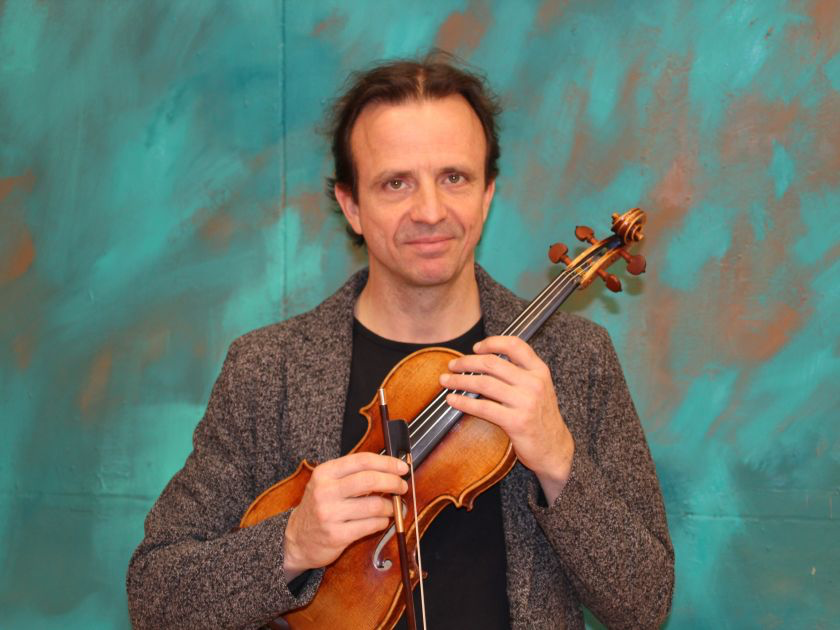
Photo: animelena
Programme Notes:
Vytautas Germanavičius
72- Shades of Light
The sonic structure of the work consists of two scales derived from the Lithuanian folk song Vaikščiojo tėvulis (Beloved Father was Walking About), set a perfect fifth apart. These form a five-tone equal-tempered scale, which is chromatically expanded with quarter-tones, sixth-tones and twelfth-tones. A second pentatonic sixth-tone scale is also formed and chromatically expanded with twelfth-tones. In the first section of the piece, the cluster of microtonal pitches constantly shifts, moving in different directions in the right and left hands. In the second section, the remaining sixth-tones and twelfth-tones come to the fore, merging at the end of the piece into a new tutti cluster that leaves behind a gradually fading chord. This is a musical transition from the static, architectural lighting embodied in 12-TET to the dynamic, constantly changing play of light in the forest canopy, where even the slightest gust of wind (a sixth- or a twelfth-tone) alters the balance between shadow and light.
Juhani Nuorvala
Suite 72
Suite 72 is Juhani Nuorvala’s third suite for microtonal keyboards. Suite 22 (2021), which uses twenty-two equal divisions of the octave (22-EDO), was written for Elisa Järvi’s quarter-tone keyboard at the Sibelius Academy. Suite 36(2025), in 36-EDO, is scored for Lumatone and piano, with the latter instrument in standard tuning (a subset of 36-EDO). Not all the music in the new Suite 72 for violin and Ekmelic organ is in 72-EDO: some of it is in 36-EDO, which is itself a subset of 72-EDO and is also the default tuning of the organ.
72-EDO provides an excellent approximation of 11-limit just intonation, a tuning system based on pure intervals derived from the overtone series, including the fifth, seventh and eleventh harmonics. Much of the harmonic language of the pieces is based on this system. The melodies often make use of the slendric temperament or scale, in which the perfect fifth is divided into three equal parts.
The six pieces of the Suite 72 vary in character: there is both dance-like and lyrical music. One of the pieces, Bene quondam dociles, is a microtonal arrangement of a song from the Finnish sixteenth-century collection Piæ cantiones. Like all the songs in this early collection from the Catholic period, this beautiful tune in the Phrygian mode is of medieval origin. It has become an obsession for Juhani: this is the fourth or fifth time he has used it!
Juhani Nuorvala
Prelude 36
Thirty-six-tone equal temperament is the default tuning of the Ekmelic organ. Juhani Nuorvala had already written a piece in this tuning, Suite 36, for Lumatone and piano. The Lumatone is a microtonal keyboard, while the piano is in standard tuning, with all twelve of its notes also present among the Lumatone’s thirty-six . The key layouts of the Ekmelic organ and the Lumatone are very different. But Nuorvala looked again at the Suite and saw that the Lumatone part of the Prelude would be quite playable on the organ. Prelude 36 is an arrangement of the first movement of Suite 36.
Božena Čiurlionienė
Order Itself is Harmony
Order Itself is Harmony explores the relationship between resonance, silence, and musical time. Inspired by the Pythagorean understanding of harmony as a principle of order, the work unfolds through sustained sonorities separated by moments of silence, allowing the organ’s natural resonance to shape the musical discourse. Rather than pursuing melodic or developmental processes, the composition presents harmony as a continuous state in which sound and silence coexist, inviting the listener to contemplate the gradual emergence of order through the act of listening.
Rytis Mažulis
Modulamen
The title of the piece is derived from a Latin term found in a tenth-century treatise on organum (modulamen – singing, musical composition and, ultimately, melody). Mažulis tries to explore this universal musical parameter through minute alterations of pitch and duration. The cyclical repetition of patterns and segments remains the essential principle of development over time, but the composer avoids exact copy-and-paste repetition, seeking subtler nuances and micro-transformations. The duration of the piece may vary depending on the chosen tempo and is approximately 8–9 minutes.
Agustín Castilla-Ávila
Sand and Foam
The piece is based on Kahlil Gibran’s poem of the same title and has a meditative character. The atmosphere created by the guitar harmonics is combined with the prominent role of the organ, which brings a row in the middle section that continues almost until the end of the composition.
Mykolas Natalevičius
Project 658
The piece takes its title from Project 658, the designation for K-19, the Soviet Union’s first nuclear-powered ballistic-missile submarine. Built between 1958 and 1960, the 114-metre vessel was equipped with two nuclear reactors and carried nuclear ballistic missiles. Its technological ambition was shadowed by an almost absurd succession of disasters: fatal construction accidents, a sailor crushed during missile loading, the 1961 reactor accident, a collision with the American submarine USS Gato, a devastating fire, and a fatal electrical accident in 1982. Because of its numerous accidents, the submarine acquired the unofficial nickname “Hiroshima”. Together, these accidents account for more than fifty deaths, even excluding disputed estimates of additional radiation-related fatalities. Despite these events and having undergone repeated repairs, K-19 remained in service until 1990. The piece approaches this sequence of tragedies as a metaphor for human heroism entangled with the absurdity of war, the standards of the Soviet Union industry and a military system’s indifference to individual human lives. Sailors exposed themselves to lethal levels of radiation, improvised emergency repairs, and died while saving others. Their courage sustained a machine whose purpose was potentially to destroy many human lives. Institutional secrecy compounded their suffering: radiation sickness was concealed under a different medical diagnosis, and the catastrophe remained shrouded in a secrecy for decades. Parts of the piece metaphorically depict the cold depths of the ocean, invisible and lethal radiation, the sharp piercing intensity of pain, and the striking, frightening, chaotic yet rhythmic sound of a Geiger counter measuring dangerous levels of radiation.
Biographies:
Elisa Järvi (Finland)
Pianist Elisa Järvi performs both traditional and experimental repertoire. She has worked with many contemporary composers, premiering and recording their works. In addition to teaching, her recent research interests include György Ligeti’s piano music, topics in microtonal music, and the history of piano playing in Finland. Together with composer Sampo Haapamäki, Elisa Järvi has developed a new kind of quarter-tone piano and in 2017 she gave the premiere of Haapamäki’s concerto for quarter-tone piano. Recently, Järvi has commissioned new compositions for the instrument and has also been searching for historical repertoire.
Elisa Järvi holds degrees from the Sibelius Academy (MMus, DMus), the University of Helsinki (MA) and the Hochschule für Musik und Tanz Köln (The Cologne University of Music and Dance) (Konzertexamen, a postgraduate degree in solo performance). Her debut album, Aufforderung zum Tanz (Invitation to the Dance) (Fuga), features dances and dance-influenced compositions for piano and fortepiano.
Elisa Järvi’s most recent album, In Tune – Tune In! (Sibarecords, 2025), explores historical and contemporary microtonal piano repertoire using 24-EDO and 22-EDO tuning systems. It features works by early and pioneering composers of microtonality alongside newly commissioned pieces by contemporary Finnish composers, including Juhani Nuorvala and Lauri Mäntysaari. (https://blogit.uniarts.fi/en/post/elisa-jarvi-in-tune-tune-in/)
Frank Stadler (Austria)
Frank Stadler studied violin with Helmut Zehetmair at the Mozarteum University in Salzburg, graduating with distinction. He subsequently served as Zehetmair’s assistant for three years. Further studies took him to Ruggiero Ricci and these were complemented by masterclasses with Thomas Brandis, Franco Gulli and Ivry Gitlis. Stadler later taught violin at both the Mozarteum University in Salzburg and the Anton Bruckner Private University in Linz.
Since 1999, Stadler has served as Coordinated First Concertmaster of the Mozarteum Orchestra in Salzburg. He has also appeared as a guest concertmaster with other orchestras including the Tokyo Symphony Orchestra, the Bavarian State Opera and the City of Birmingham Symphony Orchestra as well as regularly at the Teatro Real Madrid.
As a soloist, Stadler has performed at venues and festivals including the Vienna Musikverein, the Großes Festspielhaus in Salzburg and Warsaw Autumn (Warszawska Jesień) festival. He has appeared with ensembles such as the Mozarteum Orchestra Salzburg, the Tonkünstler Orchestra, the Stuttgart Chamber Orchestra, the Orchestre National des Pays de la Loire, the Vorarlberg Symphony Orchestra, the Cairo Symphony Orchestra and the Egyptian Sinfonietta.
Stadler’s close association with Mozart’s music forms an important part of the violinist’s artistic work. Stadler has performed internationally on historical instruments from the Mozart collections and in 2025 appeared at EXPO Osaka performing Mozart’s Violin Concerto on Mozart’s original Costa violin. Earlier tours organised by the International Mozarteum Foundation included a series of fourteen concerts in Tokyo and Nagoya.
In 1993, Stadler founded the Stadler Quartet, which has gained an international reputation, particularly for its performances of contemporary music. The ensemble has appeared repeatedly at the Salzburg Festival and collaborated with composers including George Crumb, Henri Dutilleux, Helmut Lachenmann, György Kurtág, Wolfgang Rihm, Jörg Widmann, Friedrich Cerha, Georg Friedrich Haas, Steve Reich, Chaya Czernowin and Giya Kancheli. The Quartet’s recordings devoted to works by Helmut Lachenmann and Friedrich Cerha have earned critical acclaim and awards, with the Lachenmann recording receiving the ORF Pasticcio Prize. In recent years, the music of Mieczysław Weinberg has been a particular focus of the Quartet’s work.
Stadler is also a dedicated advocate of contemporary music. Composers including Bogusław Schaeffer, Kuzma Bodrov, Vladimir Rosinsky, Herbert Grassl, Hossam Mahmoud and Theodor Burkali have dedicated violin sonatas or concertos to him.
Alongside his orchestral, solo and chamber-music activities, Stadler develops projects that bring together classical repertoire, contemporary music and intercultural artistic exchange.
Juhani Nuorvala (Finland)
A diverse range of influences – microtonality, minimalism, neo-romanticism and popular music such as techno – is a distinctive feature of Juhani Nuorvala’s musical language. Born in 1961, Nuorvala studied composition in the 1980s and 1990s in Helsinki, Paris and New York, with such teachers as Eero Hämeenniemi, Tristan Murail and David Del Tredici. Juhani Nuorvala has composed chamber, orchestral and electronic works. He has also created music and sound for several theatrical productions and written an opera based on the life of Andy Warhol. Since the early 2000s, Nuorvala has written most of his music using alternative tuning systems. He currently teaches composition at the Sibelius Academy.
Hossam Mahmoud (Egypt, Austria)
Hossam Mahmoud, born in Cairo on 12 July 1965, is a composer, oud player and violist whose artistic work has developed at the intersection of Arab and European musical traditions.
Hossam Mahmoud studied Oriental and European music, oud, viola and music education in Cairo, and composition with Ahmed Al Saedi from 1987 to 1990. In 1990, he moved to Austria, where he continued his composition studies with Beat Furrer at the University of Music and Performing Arts Graz and later with Bogusław Schaeffer at the Mozarteum University in Salzburg, graduating with distinction in 1998.
Mahmoud’s oeuvre includes chamber and orchestral music, electronic music and music theatre. A central aspect of his work is the encounter between contemporary European compositional techniques and Arab musical and spiritual traditions. Rather than simply combining different stylistic elements, he seeks to create a musical language in which different concepts of time, sound, expression and spirituality can interact.
His works have been performed at the Salzburg Festival, Klangspuren Schwaz and at numerous venues and festivals in Austria, Germany, Egypt, France and elsewhere. Mahmoud also frequently appears as an oud player in performances of his own music.
Among Mahmoud’s major works are the string trio Tarab I (2004), Seelenfäden (Threads of the Soul) for Sufi choir, mixed choir and ensemble, commissioned by the Salzburg Festival, and the opera 18 Tage… (18 days…), inspired by the Egyptian Revolution of 2011. Other notable works are Tahrir – Befreie dich! (Tahir – Free Yourself!) and Stabat Mater Furiosa, a piece that confronts violence, war and the vulnerability of human existence.
Mahmoud’s awards and grants include a scholarship from the Province of Salzburg in 2000, a residency at the Komponistenforum Mittersill in 2001, an Austrian State Scholarship in 2002, the Music Prize of the Province of Salzburg in 2005 and the Grand Art Prize for Music of the Province of Salzburg in 2013. In 2019, he received another Austrian State Scholarship for Composition.
For many years, Mahmoud has been closely connected with Salzburg’s cultural life. His work is characterised by an enduring interest in intercultural dialogue, spirituality and the relationship between artistic expression and contemporary social realities.
Nancy Kamal (Egypt)
Nancy Kamal is an independent Egyptian visual artist and filmmaker. She graduated from the Faculty of Fine Arts at Helwan University, specialising in Cartoon Animation. Her work spans documentary and experimental filmmaking, exploring cultural memory, artistic traditions, spiritual relationships, and the transmission of knowledge across generations.
Her first short film, Fried Dreams, received the Short Film Award at the Alexandria International Film Festival and was screened at the Dubai International Film Festival in 2008. Her second film, Coffin Décolleté, had its world premiere in Rio de Janeiro, Brazil, in 2019. It was officially selected for over 110 festivals in thirty-five countries and received twelve awards across international festivals in Spain, Brazil, Italy, the United States, Turkey, India, Poland, and Australia.
Her first feature-length documentary, Eternal School, is an Austrian-Egyptian production supported by WØD, Salzburg. The film explores the relationship between Ramses Wissa Wassef and two generations of weavers at the Wissa Wassef Art Centre in Harrania, Egypt. It premiered at Mozartkino in Salzburg, Austria, and was subsequently screened at Cairo Opera House, Egypt.
Kamal continued her collaboration with WØD, Salzburg, through a documentary film series exploring apprenticeship, love, and the transmission of knowledge across generations in Egypt. Her film School of Memory – Part 1examines the transmission of Coptic hymns and the relationship between teachers and disciples across generations within the Coptic Orthodox Church. The film had its world premiere in Salzburg in November 2023 and was later screened at the Great Hall of the Bibliotheca Alexandrina in November 2024, followed by a screening at Cairo Opera House.
Her latest documentary, Al Gazoulia, follows the Egyptian Sufi order Al Gazoulia over a year and a half, exploring its rituals, spiritual traditions, and relationships within the order on an intimate journey through villages and desert landscapes.
Through her collaboration with WØD, Kamal continues to explore the relationship between art, memory, spirituality and the transmission of knowledge across generations in Egypt.
Agustín Castilla-Ávila (Spain, Austra)
Agustín Castilla-Ávila is a composer, guitarist, improviser, graphic artist, author and artistic researcher. He has worked internationally as a composer in Europe, Asia and the USA. His music has been performed under the direction of conductors including D. Russell-Davies, J. Kalitzke, T. Ceccherini, A. Soriano, H. Lintu and H. Schellenberger, among others. Agustín Castilla-Ávila has written solo, chamber and orchestral music, as well as works for theatre, dance and opera. His works have been published by Doblinger Verlag, Bergmann Edition, Mackingerverlag, Da Vinci Edition, Verlag Neue Musik, Matrix and Joachim Trekel. His music has been recorded on sixteen CDs and three DVDs.
Castilla-Ávila is president of the Internationale Gesellschaft für Ekmelische Musik in Austria, and director of the symposium Mikrotöne: Small is Beautiful in Salzburg and Vilnius and The Microtonal Village in New York.
Castilla-Ávila has lectured internationally on his ideas, including at institutions such as the Juilliard School in New York, the Mozarteum University in Salzburg, the Yong Siew Toh Conservatory of Music in Singapore and Boston University.
As a graphic artist, Castilla-Ávila has exhibited his series Still Life with Silence in galleries and museums in Japan, Ukraine, Latvia, Estonia, Lithuania, Denmark, Austria, Italy, France, Spain, Portugal, the USA and Mexico.
Julija Vingelė (Lithuania)
Julija Vingelė is a pianist and a researcher. She completed her bachelor’s studies at the Lithuanian Academy of Music and Theatre and the University of Music Franz Liszt in Weimar. She received her master’s degree from the Hanover University of Music, Drama and Media. In 2025, Vingelė released her debut album, devoted to music by Lithuanian composers, in collaboration with the Lithuanian Music Information Centre.
Julija is currently pursuing an artistic doctorate at the Lithuanian Academy of Music and Theatre, where she explores interdisciplinary connections between the arts and their expression in musical performance. She also works as a researcher in the Cluster of Excellence Improvisation and Creativity in the Performing Arts at the Performing Arts Research Centre, Lithuanian Academy of Music and Theatre. Julija Vingelė has presented her research at international conferences in Vilnius, Valletta, Tallinn, the Pyrenees and Bangkok. She was awarded a scholarship by the Research Council of Lithuania in recognition of her academic achievements.
Neringa Valuntonytė (Lithuania)
Neringa Valuntonytė is a pianist and artist-researcher who explores artistic identity and its expression in the art of performance. Through her conceptual recital programmes, she explores the performer’s persona, seeks new forms of interaction between performer, music and audience, and incorporates visual and performative elements into musical performance.
Neringa has performed solo and chamber music programmes sin Germany, Denmark, Finland, Poland, Ukraine, Estonia, Latvia, Austria and Lithuania. As a soloist, she has appeared with the Lithuanian Chamber Orchestra, the Lithuanian National Symphony Orchestra, the Symphony Orchestra of the Szczecin Philharmonic and the Lviv Chamber Orchestra Akademia.
In 2025, Neringa was awarded a Doctor of Arts degree from the Lithuanian Academy of Music and Theatre. Her artistic research examined the creation of the classical music performer’s persona and its relationship to personal branding. She continues to explore this subject through her creative practice, experimenting with different ways of constructing and communicating artistic identity.
One of the most significant achievements of her early career as a pianist was winning third prize at the VIII International M. K. Čiurlionis Piano and Organ Competition in 2019.
Paula Bagotyriūtė (Lithuania)
Paula Bagotyriūtė is a Lithuanian pianist of the younger generation, active in contemporary, improvised and experimental music. After completing a bachelor’s degree in classical piano under Professor Zbignevas Ibelgauptas at the Lithuanian Academy of Music and Theatre, she pursued a master’s degree in contemporary and improvised music, studying with Lithuanian musicians Petras Geniušas, Liudas Mockūnas, Arnas Mikalkėnas, Dmitrijus Golovanovas, Vykintas Baltakas and others.
The pianist’s work encompasses a wide range of musical genres, from contemporary opera and jazz to interdisciplinary projects. Paula has appeared at Lithuanian music festivals and in projects Improdimensija, MuzikaVilniui, Vilnius Jazz, Operomanija, and the Christopher Summer Festival, among others. In autumn 2023, she was invited to perform at the Beijing Music Festival as a member of the Mahler Foundation Festival Orchestra. In 2024, she appeared at the Into the Open interdisciplinary art festival in Berlin, held at Kühlhaus Berlin. That same year, she was named one of the winners of Method, Sound & Silence, a competition for creators of experimental electronic music and sound art. She also performed at the Stanser Musiktage festival in Switzerland with the Lucerne Improvisers Orchestra (LUIO). In 2025, she and the duo Briedinė erkė won the Grand Prix at the Vilnius Jazz Young Power competition. In summer 2026, Paula opened the Christopher Summer Festival’s summer concert series with a performance at the industrial venue Gallery 1986, treating the piano as a rhythmic instrument within the context of electronic dance music.
The reciprocal experience shared by performer and listener is central to Paula’s work. She communicates her inner states most fully through sound and improvisation, revealing her relationship with the creative moment as it unfolds. Audiences are invited to experience both their own inner processes and those of the performer. Responding to spontaneous impulses, Paula creates music that is constantly evolving and unique to each moment. She perceives the piano as a sculptural sonic ecosystem in which every material – strings, wood, metal and keys – becomes an equal element in the creative process. Paula transforms the instrument’s sound by placing various objects, including magnets, on the strings, thus expanding the piano’s conventional timbre into a multilayered, orchestral sonority. At the centre of her work is listening as an active, conscious state that allows sound to emerge without predetermined control so that music becomes a living, constantly changing experience.
Mantautas Krukauskas (Lithuania)
Mantautas Krukauskas is a composer and sound artist and an associate professor in the Department of Composition at the Lithuanian Academy of Music and Theatre in Vilnius. He is also a co-founder of the Music Innovation Studies Centre and has served as its head since 2016. The Centre is an academic laboratory for teaching, artistic practice and research, focusing on music technology, innovation in music and music education, interactive arts and immersive media.
Mantautas’ compositions and artistic works include chamber music, electronic music, sound art, and music for theatre and dance productions. They have been performed in Lithuania, Austria, Germany, France, Canada, the United States and other countries. His artistic practice also includes electronic music performance, as well as music production and arrangement within the creative industries.
Mantautas Krukauskas has been actively involved in a diverse range of activities, including the leadership and management of international artistic, research and educational programmes. His interests include interdisciplinarity, creativity, music and media technologies, and the interplay between different aesthetic and cultural approaches.
Božena Čiurlionienė (Lithuania)
Božena Čiurlionienė is a Lithuanian composer and music researcher. She holds a Doctor of Arts degree from the Lithuanian Academy of Music and Theatre, where she also completed her bachelor’s and master’s degrees in composition. She has been active as a composer since 2006, writing orchestral, chamber, choral and progressive rock music. Her compositions have been performed internationally, including in Lithuania, France, Germany, Japan, Poland, the United Kingdom, the United States, and other countries.
In 2025, Božena’s orchestral work Confessiones won a Silver Medal at the Global Music Awards while her choral composition Agnus Dei was awarded the Diamond Prize at the Erik Satie International Music Competition in 2024. Her artistic and scholarly interests include contemporary composition, symmetrical constructivism, with a particular focus on the structural and historical significance of the tritone in musical composition.
Rytis Mažulis (Lithuania)
Rytis Mažulis studied composition with Professor Julius Juzeliūnas at the Lithuanian Conservatory (now the Lithuanian Academy of Music and Theatre), graduating in 1983. In 1989, he began teaching at his alma mater, and from 2006 to 2014, he served as Head of its Department of Composition. From September 1998 to April 1999, he undertook a residency at the Akademie Schloss Solitude in Stuttgart.
In 1988, he was awarded the Tylos Prize for his chamber composition Miegas (Sleep), and in 1989, he received the Lithuanian Culture Foundation Prize for his chamber and vocal music. Mažulis has three times won the prize for the best vocal composition (ajapajapam, 2002; Forma yra tuštuma (Form is Emptiness), 2006; and Coda, 2011) in the Lithuanian Composers’ Union’s competition for the best compositions of the year. In 2004, the composer was awarded the Lithuanian National Prize.
Rytis Mažulis’ works have been regularly performed at various festivals and other musical events, including Nyyd(Tallinn, 1991), Musikhøst (Odense, 1992), Deutschlandfunk (Cologne, 1992), Prague Spring (1995), Norrtälje Chamber Music Festival (1995), De Suite Muziekweek (Amsterdam, 1995), Minimalisms (Berlin, 1998), Klang Raum(Stuttgart, 1998), the 53rd Conference of the Institute for New Music and Music Education (Darmstadt, 1999), MaerzMusik (Berlin, 2003), Melos-Ethos (Bratislava, 2005), the Huddersfield Contemporary Music Festival (2006, 2007), Images Sonores (Liège, 2007) and the ISCM World Music Days (Vilnius, 2008), as well as concerts in Warsaw, Gdańsk, Düsseldorf, Stuttgart, London and elsewhere.
The radical and experimental music of Rytis Mažulis can be described using such oxymorons as “minimalist maximalism”, “complex simplicity” or “dynamic stasis”. The composer sometimes realises his ideas within the span of a single semitone, treating a microscopic particle of sound as a space of infinite density. His music resembles a series of hypnotic sound rituals, in which it is easy to lose one’s sense of time and space. The Belgian record label Megadisc Classics also became interested in this phenomenon of Rytis Mažulis’ music, releasing four albums devoted to his work between 2004 and 2010.
Rytis Mažulis’ entire body of work is characterised by distinctive stylistic purity, the integrity of its musical fabric, concentric, circular forms, and symmetry founded on contrapuntal – predominantly canonical – techniques. Such a creative approach naturally calls for carefully chosen compositions of musical works to produce a homogeneous, “crystalline” sound. Rytis Mažulis therefore primarily writes for ensembles of equal voices or keyboard instruments; his works for the latter may be performed live or realised using a computer, which he treats as a kind of “super-piano”. Some works also exploit specific computer capabilities that cannot be replicated in performances on conventional instruments.
Vytautas Germanavičius (Lithuania)
Vytautas Germanavičius is a Lithuanian composer whose work combines elements of microtonality, minimalism and neo-romanticism. He pays particular attention to the timbral spectrum of sound and microintervalic structures. In his works, musical material often unfolds within a constantly evolving sonic space, in which subtle transformations of timbre, texture and harmonic field play an important role. Since 2021, Germanavičius has been integrating the findings from his research into Lithuanian traditional vocal and instrumental music, together with the microintervallic structures of authentic pitch sequences, into his compositional system.
Vytautas Germanavičius studied composition with Julius Juzeliūnas at the Lithuanian Academy of Music and Theatre before receiving further training in electronic and computer music and sound recording technologies at Mills College in the USA. Vytautas holds a doctorate in the humanities and is the author of the monograph From Natural Music Arrangements to Ethno-Song Sequence Systems: Theory versus Creation (2024). He has received UNESCO–Aschberg and Fulbright fellowships, the Elizabeth Mills Crothers Composition Prize, and the Lithuanian Composers’ Union Award for Best Orchestral Work.
The composer has held residencies at the Banff Arts Centre, the Visby International Composers’ Centre and the Cité Internationale des Arts in Paris and has undertaken further training at the Sibelius Academy and IRCAM in Paris. His music has been presented at musical events and venues including the ISCM World Music Days, Gaudeamus Music Week, the Other Minds concert series, the Berlin Philharmonic and Muza Kawasaki Hall in Tokyo, as well as at other festivals in Europe, Asia, and the Americas.
Mykolas Natalevičius (Lithuania)
Mykolas Natalevičius is a Lithuanian composer whose work spans a wide range of musical fields, from acoustic instrumental writing to experimental electronics. Music was not his first form of creative expression: he began his artistic path as a visual artist, taking part successfully in competitions and exhibitions, and in 1998 he received a commendation from the Mayor of Vilnius “For Artistic Activity”. He began his musical studies at the age of sixteen, going on to read composition at the Lithuanian Academy of Music and Theatre under Professors Vytautas Barkauskas and Ričardas Kabelis. He also attended courses in voice (with Deividas Staponkus and Algirdas Janutas) and symphonic conducting (with Gintaras Rinkevičius).
In 2010, he studied at the Danish Institute of Electronic Music under Henrik Munch, and in 2013 he undertook a research stay at the Centre for Digital Music at Queen Mary University of London under Professor Geraint Wiggins, working in the Computational Creativity Lab. In 2015, he received a doctorate in arts by the Lithuanian Academy of Music and Theatre, where he is now an associate professor in the Department of Composition. He was elected to the Academy’s Senate in 2021, and since 2025 he has served as head of the Department of Composition.
From 2017 to 2025, Natalevičius led the Lithuanian Composers’ Union. On his initiative, the Baltic Contemporary Music Network was founded in 2019, and he has continued to coordinate its activities. Since 2020, the Network has organised the Baltic Music Days festival as well as a number of music export projects. In 2025, the Network began collaborating with the Council of Nordic Composers, with which it jointly initiates projects for the international dissemination of contemporary music.
Natalevičius’ output can be divided into two principal strands. The first is experimental, grounded in the combination of extreme musical idioms such as drone and noise; the second is minimalist and consonant, drawing on the aesthetics of ambient music and soundscape. The experimental strand finds its most frequent expression in orchestral, chamber and electronic music, and is typically tied to liminal experience and to industrial and catastrophic themes (Trauma, Gas Flare, Karachay); his orchestral and chamber works in this vein also draw on the techniques of spectral music. The second strand emerges most often in choral, piano and organ writing, as well as in music for film and theatre, and is characterised by consonant sonorities and a flowing atmosphere (dew.mist, Dreamy, Dulce Lumen).
Natalevičius’ music is performed in Lithuania and abroad at contemporary art events and festivals. Among the internationally and nationally renowned ensembles that have performed his works are L’Itinéraire (France), LOOS Ensemble (the Netherlands), Quasar (Canada), Altera Veritas (Latvia), the Latvian State Academic Choir Latvija, the Lithuanian National Symphony Orchestra, the Lithuanian State Symphony Orchestra, the St. Christopher Chamber Orchestra, the choirs Jauna Muzika and Vilnius, the DIISSC Orchestra, Synaesthesis, Twenty Fingers Duo and Trio Agora, alongside soloists such as tenor Algirdas Janutas and organist Jūratė Landsbergytė..
Natalevičius’ work has been recognised with numerous international and national awards. In 2008, together with his colleagues from the New Opera Action creative group, he received the prize for best stage work at the Lithuanian Composers’ Union’s annual Best Works competition. Synchronisation (2009), a collaboration with video artist Rimas Sakalauskas, went on to win seven international awards and was presented at forty festivals and exhibitions in various countries. In 2012, he received the Young Artist Prize of the Ministry of Culture of the Republic of Lithuania.
His orchestral and choral music has likewise been honoured. In 2011, Kampana for symphony orchestra received the debut prize at the Lithuanian Composers’ Union’s Best Works competition. In 2014, O Crux Ave took first prize and the Audience Award at the Vox Juventutis choral music competition. In 2016, Karachay was distinguished at the same Best Works competition with the award “For Vivid Orchestral Writing”.